


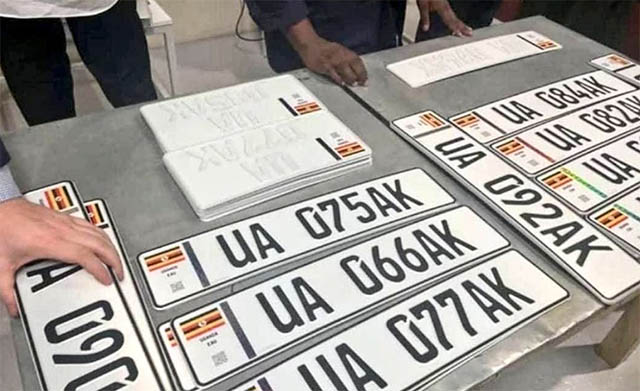
The Uganda Law Society (ULS) has called for the suspension of collections under the government’s Intelligent Transport Monitoring System (ITMS) agreement, pending a lawful and competitive procurement process.
The Society argues that the agreement between the government and Joint Stock Company Global Security was signed in violation of the Public-Private Partnerships (PPP) Act, raising concerns about its legality, financial transparency and implementation.
Presenting the society’s recommendations to Parliament’s Physical Infrastructure Committee on Monday, advocate Roger Mugabi said Parliament should adopt the Attorney General’s position that the agreement is void for non-compliance with the law.
The society also called for a special audit of all funds collected by the company and Virtus Global Security, including the unexplained 90,300 Shillings per plate, and refunds for motorists who paid for services they did not receive.
ULS further wants the full agreement which was first signed in 2021, its 2025 amendment, memorandum of understanding, feasibility study, due diligence report and financial model tabled before Parliament in accordance with Sections 26(10) and 26(11) of the PPP Act.
It recommended that the Inspectorate of Government investigate possible conflict of interest involving the former Attorney General under the Leadership Code Act, while accounting officers who signed the agreement should be scrutinised under Section 14(4) of the PPP Act.
Additionally, ULS called for local number plate manufacturers to be allowed back into the market through a competitive procurement process.
The committee is investigating the procurement, cost, functionality and security benefits of the digital number plates programme, including whether the existing arrangement offers value for money compared to alternative technologies.
The inquiry has also heard from the GPS Tracking and IoT Association Ltd (GTIAL), which brings together more than 20 companies in the vehicle tracking industry. The association has proposed a locally developed tracking solution covering two million vehicles and motorcycles at an indicative cost of no more than 250,000 Shillings per asset over 10 years.
GTIAL chairman Eng. Henry Isaiah Katongole told the committee that the figure was a target rather than a final quotation and would require further assessment through a detailed cost model and a pilot project. The proposed cost would cover tracking hardware, installation, connectivity, software platforms, integration with government systems, maintenance, replacement, technical support and applicable taxes.
Statutory fees and number plates would be itemised separately. The association urged the government to disclose the individual costs of number plates, tracking devices and related services under the existing arrangement to allow a fair comparison of affordability, functionality and value for money.
GTIAL argued that collective procurement and locally developed technology could reduce costs while maintaining vehicle security. However, the companies acknowledged that their proposal must demonstrate technical capability, sustainability and compatibility with government systems.
The proposal comes against the published ITMS fee of 714,300 Shillings for new number plates for both vehicles and motorcycles, which the association said places an additional financial burden on vehicle owners and motorcycle riders.
Some committee members questioned whether local companies could deliver a more effective solution, emphasising that the assessment should focus on technological capacity and security outcomes rather than the nationality of service providers.
Committee chairman Mwine Mpaka asked GTIAL to provide verifiable evidence of its financial and technical capacity, including employment figures and the number of vehicles it could handle annually. Mpaka also challenged the association to explain how its proposed technology would address vehicle theft, particularly given that physical tracking devices can be removed or tampered with.
Bunyole West County MP James Waluswaka backed calls for an independent assessment, saying the introduction of ITMS had affected local tracking companies by pushing them out of parts of the market.
Waluswaka said security should remain the government’s primary concern but agreed that the existing system’s cost and performance required independent evaluation. He also cited persistent difficulties in tracking stolen motorcycles, an issue previously acknowledged by police.
The committee is expected to consider the submissions alongside other evidence as it examines the legality, procurement process, cost and effectiveness of the digital number plates programme.
If you have a story in your community or an opinion article, let’s publish it. Send us an email via editor@peaknews.co.ug. Follow our WhatsApp Channel HERE to see more of our stories. By URN