




























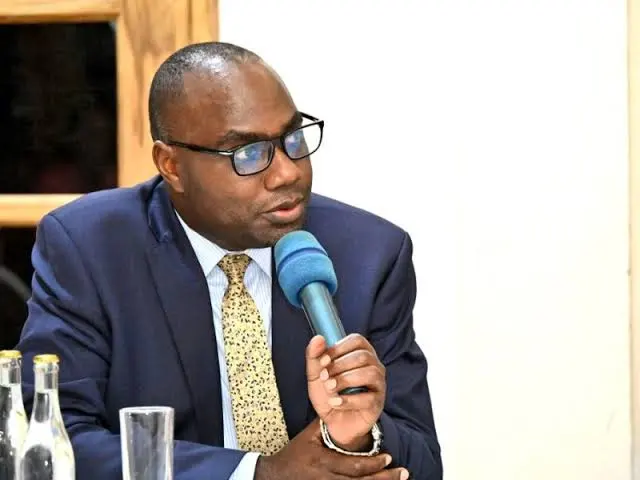
Finance State Minister Henry Musasizi has urged Ugandans to avoid panic buying of dollars as the shilling weakens, announcing plans to cut non-essential government expenditure to help ease pressure on the economy.
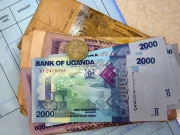
Presenting a statement on the state of the economy to Parliament on Tuesday, Musasizi said the shilling had weakened from about Shs3,604 per US dollar in March 2026 to around Shs4,500 in late October, increasing the cost of importing fuel, machinery and other goods.
The call follows a 3.7% depreciation in September and emergency monetary tightening by the Bank of Uganda, which has also intervened in the foreign-exchange market.

He attributed the depreciation to rising demand for foreign currency, particularly from petroleum importers, higher international oil prices, geopolitical tensions in the Middle East and reduced foreign-exchange inflows from some agricultural exports and tourism.
Musasizi warned that panic buying and speculative transactions driven by rumours could worsen short-term pressure on the currency.
“Let us avoid panic buying of foreign currency, speculative transactions driven by rumours and other behaviour that can amplify short-term pressure on the shilling,” he said.
He urged households and businesses to make informed financial decisions. He said the government will also reduce non-essential expenditure, including foreign and domestic travel, workshops, meetings and other administrative costs, while protecting essential public services and priority development investments.
Responding to issues raised by Members of Parliament following his presentation of the State of the Economy statement, Musasizi called on leaders to defend the country’s economic record and help the public understand the measures being taken to maintain stability.
“Uganda is one of the countries that has managed the economic fundamentals sustainably over the years,” Musasizi told Parliament, noting that the economy had registered average growth of about 6% over the previous decade.
The Minister cautioned against suggested interventions that could provide only temporary relief while leaving the country exposed to prolonged pressure on foreign-exchange reserves.
He challenged calls for measures such as subsidies or sustained reliance on reserves to address the pressure on the shilling, asking what would happen if the situation persisted for another year and reserves were depleted.
“Do you want an economy with no reserves? The answer is definitely no,” he said. Musasizi disclosed that Government was already using gold as one of the assets to buffer the country’s reserves, under a policy approved by Cabinet and communicated to Parliament.
He urged MPs to use the information provided in his statement to inform the public about the state of the economy and reassure citizens that Government was taking necessary steps to address the challenges.
“We are working everything possible and we are confident we shall overcome this storm,” he said. D
eputy Speaker Thomas Tayebwa called on Parliament and other leaders to work together in supporting efforts to stabilise the economy.
He said the Minister could return to the House if further interventions were needed and noted that the relevant parliamentary committee would continue engaging with the Ministry on economic developments.
Musasizi committed to keeping Parliament informed of any additional measures Government may introduce as circumstances evolve.
He said the Ministry monitors economic performance daily, including how markets close and movements in interest rates, to guide its assessment of the situation.
“As I stated in the statement, if circumstances look that we make other interventions, we will definitely come back and inform the House,” Musasizi said.
The measures come amid growing pressure on the foreign-exchange market, which has prompted the Bank of Uganda (BoU) to raise interest rates and sell dollars to support the shilling.
On October 14, the central bank raised the Central Bank Rate from 9.75% to 12%, an increase of 2.25 percentage points. It had also increased the cash reserve requirement for commercial banks from 11% to 13.5%, effective September 24, to tighten liquidity in the financial system.
The central bank later returned to direct foreign-exchange market intervention, selling dollars to support the currency.
However, the shilling’s recovery following the initial intervention was short-lived, with the currency again coming under pressure.
Musasizi said the central bank would continue managing liquidity and intervene in the foreign-exchange market when necessary to address excessive volatility.
He, however, reaffirmed the government’s commitment to a market-determined exchange rate, saying the objective was to maintain price and financial stability rather than defend a particular exchange-rate level.
The Ministry of Finance’s September 2026 Performance of the Economy Report shows that the shilling depreciated by 3.7% against the US dollar during the month, trading at an average mid-rate of Shs3,868.87 per dollar, compared with Shs3,730.25 in August.
The report attributed the depreciation mainly to higher international oil prices and rising US Treasury yields, which strengthened the dollar globally The pressure on the shilling has also coincided with rising domestic inflation.
The report shows that annual headline inflation increased to 4.6% in September from 4.1% in August, partly reflecting higher food prices and increased production costs associated with transport and energy.
The weaker currency adds to these pressures because importers need more shillings to purchase the same amount of foreign currency, raising the domestic cost of imported fuel, machinery, industrial inputs and other goods.
Musasizi said the demand for dollars had increased across several sectors of the economy.
He cited petroleum costs, shipping and insurance expenses associated with geopolitical tensions, as well as declining global prices for key agricultural exports, particularly coffee and cocoa, and reduced tourism receipts.
He also pointed to the importance of managing Uganda’s international reserves prudently, saying they provide a buffer against external shocks and help the country meet its foreign obligations.
Despite the currency pressures, the minister maintained that Uganda’s economic fundamentals remained strong, citing continued production, investment and exports.
The September report supports some of that assessment. The Purchasing Managers’ Index stood at 53.0, above the 50-point threshold that signals improving private-sector business conditions, while the Business Tendency Index was 55.80, indicating positive business sentiment.
The Composite Index of Economic Activity also rose by 0.3% in August to 193.87 from 193.30 in July.
Musasizi urged households to prioritise essential expenditure and conserve fuel and energy, while encouraging businesses to reduce waste, improve efficiency, source inputs locally where commercially viable and expand production for export markets.
He said government and the Bank of Uganda would continue providing timely information to support informed decisions and confidence in the economy.
By URN
If you have a story in your community or an opinion article, let’s publish it. Send us an email via editor@peaknews.co.ug. Follow our WhatsApp Channel HERE to see more our stories.