

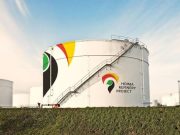























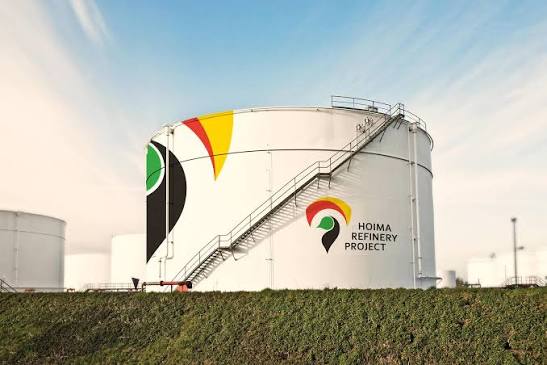
The planned US$4 billion oil refinery at Kabaale in Hoima District is targeting a Final Investment Decision (FID) in February 2027, but key agreements, engineering work, and arrangements for transporting heavy equipment remain outstanding.
The planned refinery, with a capacity to process 60,000 barrels of crude oil per day, is a cornerstone of Uganda’s strategy to become a significant player in the global oil market.
Michael Nkambo Mugerwa, General Manager of the Uganda Refinery Holding Company, told Parliament’s Committee on Commissions, Statutory Authorities and State Enterprises (COSASE) that negotiations on the commercial agreements needed to advance the project were ongoing. At the same time, basic engineering was about 80 per cent complete.

The agreements include the Host Government Agreement, Shareholders’ Agreement, Crude Suppliers’ Agreement and the tolling agreement.
These will establish the respective obligations of the government, the refinery company, its shareholders and the companies supplying crude oil.
Mugerwa said the project team was reviewing more than 1,000 engineering drawings and working towards the February 2027 investment decision.
If the target is met, construction is expected to take three years, with commissioning planned for the first quarter of 2030.
“Our target is to achieve FID, final investment decision, in February of 2027,” Mugerwa told the committee.
“And then we have a three-year construction window, and the plan is to commission the refinery in the first quarter of 2030.”
The February target comes after earlier attempts to secure investors for the refinery failed to reach construction.
The current project is being developed through a partnership between the government, represented by the Uganda National Oil Company (UNOC), and Alpha MBM Investments, a United Arab Emirates-based company.
The Host Government Agreement will set out the obligations of the government and the refinery company, including government commitments on security and land ownership and the company’s obligations on national content, health, safety and the environment.
The Shareholders’ Agreement will define the financial obligations and rights of the partners, including their contributions to the project and voting arrangements.
The Crude Suppliers’ Agreement is intended to secure the 60,000 barrels of crude oil required daily to run the refinery. It involves the crude owners, including the government and UNOC, TotalEnergies and China National Offshore Oil Corporation (CNOOC).
Mugerwa told MPs that the parties were in detailed negotiations on the legal and commercial arrangements.
“And now we are in detailed negotiations relating to legal and commercial agreements, tolling agreements that the CEO mentioned earlier, shareholders’ agreement. And also, we have to finalize the crude supply agreement with the licensees. So that’s with Total and CNOOC,” he said.
The agreements matter because the investment decision requires the parties to commit to financing and implementing the project.
The refinery’s tolling model is intended to allow the government to retain ownership of the crude supplied and the petroleum products produced.
UNOC Chief Executive Officer Proscovia Nabanja told the committee that the project would cost approximately US$4 billion, requiring the government side to contribute US$1.6 billion for its 40 per cent stake. Alpha MBM is to hold the remaining 60 per cent.
“This is a capital-intensive project. You’re dealing with approximately $4 billion,” Nabanja said.
She explained that under the tolling arrangement, the government would retain ownership of the crude and the products after processing.
“UNOC will own the crude, or the Government of Uganda will own the crude. It goes through this refinery, which is a tolling structure, and whatever comes out still belongs to the government,” she said.
She compared the arrangement to taking coffee beans to a processor while retaining ownership of the beans and the resulting product. The government’s equity contribution is a major financing challenge.
Peter Muliisa, UNOC’s Director of Legal and Corporate Affairs, told judges that UNOC had about US$450 million available for the refinery and that the government had committed to raising US$1.6 billion over three years to meet its 40 per cent equity obligation.
“UNOC right now has about $450 million available for our investment in the refinery. And the government has committed to generate about $1.6 billion in the next three years to just make sure that we meet our part of equity obligations,” Muliisa said.
The US$450 million is part of the government’s US$1.6 billion contribution, leaving approximately US$1.15 billion still to be raised, subject to confirmation of actual disbursements and the funding schedule.
“So the government is very committed. I’ve never seen the government advance an entity close to half a billion dollars per project,” he said.
Muliisa said the availability of crude had been one of the main risks for investors considering a refinery before Uganda’s oil production was assured.
“You can’t have a refinery without crude,” he told the judges.
He said the government had taken on the risk in contractual negotiations, agreeing to compensate investors if crude production failed to materialise.
The circumstances and terms under which that commitment would apply are governed by the relevant contracts.
The funding arrangements for both sides therefore remain important to understanding how the project will move from preparation to an investment decision.
Muliisa also said UNOC’s macroeconomic analysis indicated that refining a barrel of crude locally could generate seven times the value of exporting it.
Alpha MBM is expected to contribute the remaining 60 per cent, equivalent to about US$2.4 billion. Some MPs questioned whether the company could raise the money, with one saying it had no history of financing a refinery project.
That figure was his description of the company’s analysis and should be read as an estimate rather than an independently established outcome.
Beyond the agreements, the project team must determine how to transport large refinery vessels to Kabaale.
Mugerwa said some vessels would be more than six metres in diameter and weigh at least 200 tonnes each. Moving them across roads in Tanzania and Uganda presents a challenge because of restrictions on heavy loads.
“Some of these vessels are over six metres in diameter, so we have a significant logistical challenge to bring such large pieces of equipment, weighing a minimum of 200 tonnes apiece, across Tanzania roads and also Uganda roads,” he said.
He said some vessels could weigh between 500 and 600 tonnes when assembled, prompting the project team to assess whether they could be transported in sections or fabricated at the refinery site.
On-site fabrication would still require imported specialist materials, including high-chromium and high-nickel steels.
The project also includes a water intake at Mbegu on Lake Albert, a pipeline of about 10 kilometres to the industrial park and a 211-kilometre multi-products pipeline to a storage terminal at Namwabula in Mpigi District.
Mugerwa said the environmental and social impact assessment was between 85 and 90 per cent complete.
The scoping report and terms of reference had been submitted to the National Environment Management Authority, security risk assessments had been completed, and geotechnical investigations were starting at the project sites.
These activities are progressing alongside the commercial negotiations. Mugerwa said both the President and Alpha MBM’s owner were committed to the February 2027 target.
The current negotiations follow previous efforts to secure a developer for the refinery. An earlier arrangement with Russian company RT Global Resources collapsed in 2016.
The government selected the American-backed Albertine Graben Energy Consortium (AGEC), also referred to as the Albertine Graben Refinery Consortium (AGRC).
That project did not proceed to construction, and its framework agreement expired in June 2023.
Ali Ssekatawa, Director of Legal and Corporate Affairs at the Petroleum Authority of Uganda, discussed the earlier attempts while addressing Ugandan judges about two months ago. He described how the government moved from one potential investor to another before agreeing to the current partnership.
Referring to the previous attempts, Ssekatawa said the U.S. sanctioned the Russian firm that had earlier negotiated with the government about the project.
“They did not give up on their geopolitics. Then we were stuck. We went back to the market. We went to the last one, which was also jumped. It was an American entity. Again, we worked with it up to the point of the actual investment. It couldn’t move. And that’s how we are with the third one,” he explained.
Ssekatawa also explained why the government had decided to take a stake in the project rather than fund the entire refinery itself. He highlighted the scale of the investment compared with earlier government projects.
“The biggest project we’ve ever done in this country was the Karuma power project. And we contributed 15%. And you remember how long that 15% took to look for $300 million. So we didn’t have the $4 billion. We didn’t have it. That is why we have to look for other partners.” Said Ssekatawa while noting the financing challenge that has dogged the refinery project over the years.