

















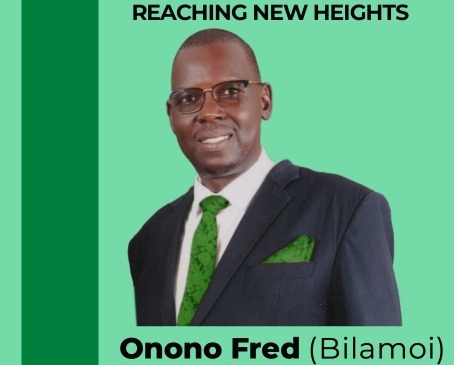
By Onono F. Bilamoi
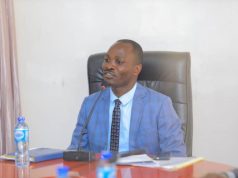
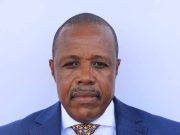
It is a pity that some few individuals like former Deputy Mayor of Kampala City, Hon Nyanjura Doreen and the group are trying to apportion blame for the waves of arrests and/or alleged kidnaps or abductions which have rocked the security space of Uganda in the recent weeks on Hon Mao. Those are misplaced accusations akin to deliberate political witch-hunts against the person of Hon Mao.
If ever there’s a person who should be directly accountable for the current citizens’ security dilemmas, then it’s the Head of State and the IGP under the direct supervision of the Minister of Internal Affairs. However, Mao can be culpable because of the collective responsibility of the State actors and this reshapes the assumption about the balance of political power – it doesn’t operate in isolation. Therefore, the blame shouldn’t be about Mao as an individual.

Matters touching on liberty, security, and the rule of law are serious and should not be trivialized nor turned into a kind of political jokes and wild political blame games.
Regarding the arrest of Hon Dr Miria Matembe, Hon. Erias Lukwago etc, those attempting to reduce the matter to Mao’s past political disagreements with Hon. Lukwago, misunderstand both Mao’s roles and contributions in the politics of opposition in Uganda. They could have disagreed but theirs was disagreement on principles.
Mao has completely nothing to do with these arrests and under this circumstance, he can even be a victim given the seminal security disaster which is almost throwing dark clouds over the country’s peace and democracy. More so, in politics, people are bound to disagree on specific matters but they can easily make up if the situation changes thus the dictum that, ‘there are no permanent enemies in politics’ !
Is this the unstoppable precursor to the much-hyped transition?
Mao’s appointment as Minister of Justice and Constitutional Affairs does not place him above the Constitution or the institutions established to enforce it. He is just a player within the broader ambit of the law. He has limited power to stop arrests or abductions for that matter. Or, are people expecting Mao to physically confront the abductors in the ‘Drones’? That one is not feasible. People should know that these actions by security operatives actually show the complete fungibility of human rights observations with the emerging contemporary political patronage system and its calibrated ambiguity.
People should also know that what Uganda is currently witnessing in political theory is called ‘Bonapartism’ which is a concept rooted in Marxist theory which refers to a militarized leadership that appears to represent the interest of ‘the people’ or the nation as a whole while ultimately ruling through the coercion of the State machinery and by the backing of the military. Let’s not forget the overwhelming support Gen MK got when he cracked whip on corruption a few weeks ago – the case of AAA.
This is beyond the power of any civilian authority. And that’s why everyone is bewildered and in awe! All these are well choreographed and calculated moves aimed at ushering in the much-awaited political transition in Uganda. Just watch the space. It may be in a Machevellian way. But the end will definitely justify the means.
Who should carry out an arrest in Uganda?
Criminal investigations, arrests, prosecutions, and judicial decisions are undertaken by constitutionally mandated bodies, each operating within its legal mandate.
Under Ugandan law, the authority to arrest suspects is outlined in the Criminal Procedure Code Act (Cap. 116), which details who can make an arrest and under what circumstances. This part of legislation mandates the POLICE and/ or any other PRIVATE individual(s) to arrest a person suspected to have committed an offense or a felony. Can the security operatives in ‘Drones’ be categorized under the ‘Any other private individuals’?
How and when the Law allows the Military to arrest?
The Ugandan law, also permits the military the power to arrest civilians. But this is strictly limited and has been under heavy contestation by the civil society organizations (CSOs) and the judiciary.
And Ugandans should blame the Legislative arm of the government (especially the 11th Parliament) for enacting the UPDF Amendment Act (2025) in its current form which gives these powers to the military.
Otherwise, the mandate for routine civilian law enforcement and arrests belongs to the Uganda Police Force. However, the military can legally intervene under specific frameworks and constitutional checks.
Under the Uganda Peoples Defence Forces (UPDF) Act, Sections 42, 43, and 44 under the part of the Act titled “Aid to the Civil Power” allows the military to ‘assist’ civil authorities (such as the police) during emergencies, riots, or instances where local police capacity has been overwhelmed. The UPDF Act, Section 119 also allows for civilians to be tried in military courts (such as the General Court Martial) under specific circumstances, such as, “when they are found aiding and abetting service offenses or are in possession of restricted military weapons”.
Are the suspects being arrested currently by the security operatives fall under the above category?
Your answer is as good as mine!
The UPDF can be involved in civilian arrests in specific, legally recognized circumstances.
The military can assist in or conduct an arrest on civilians, but they are generally required to hand the suspect over to the Uganda Police Force for lawful processing, investigation, and detention.
What are Ugandans witnessing apparently?
Political rivalry should never deprive anyone of their constitutional rights. Every Ugandan, regardless of political affiliation, deserves due process and equal protection under the law.
Where allegations of torture, unlawful detention, or abuse of rights arise, the law provides mechanisms for investigation and accountability. But at the moment, those provisions of the law are silent. Likewise, the custodians of these laws. Talk of the ‘the existence of illusion of political powers’
Much as all the institutions concerned with legal and human rights observation should discharge their responsibilities faithfully and within the Constitution, it’s very disheartening and unfortunate to hear that some of the State institutions like the Police are abdicating their core responsibilities of for example, recording citizens complaints due to fear of the military as in the case of Hon Erias Lukwago’s predicaments!
But then again, justice should not be built on speculations, social media pressure, or selective outrage. It must rest on evidence, due process, and respect for the law. The good thing with the current episodes of abductions, arrests, detentions and tortures is that they are being confirmed and validated through social media posts by the perp. This approach is intended to effectively terrify his targets into submission. It’s also designed to propagate an aura of unchecked military and quasi politico power. Negating the fact that political stability relies heavily on managing public grievances.
I think as usual, Mao still remains committed to strengthening the rule of law and ensuring that constitutional institutions function as intended. Much as he experiences portfolio paradox and technocratic constraints, he is actually operating within his tactical limitations. And he should not be blamed for someone else’s excesses who wields a much deeper State enforcement capabilities and privileges.
The writer is a public policy analyst
DISCLAIMER: The views expressed in this article are solely for and belong to the author/ writer. They don’t reflect, portray or represent those of Peak News, it’s affiliates, owners or employees. If you have a story in your community or an opinion article, let’s publish it. Send us an email via editor@peaknews.co.ug